

DigIt! names Burnswark in top five archaeological discoveries of 2025
Published: 19 December 2025
University of Glasgow Archaeology staff begin to reveal secrets behind an incredible Roman siege of an indigenous hilltop centre in southern Scotland.
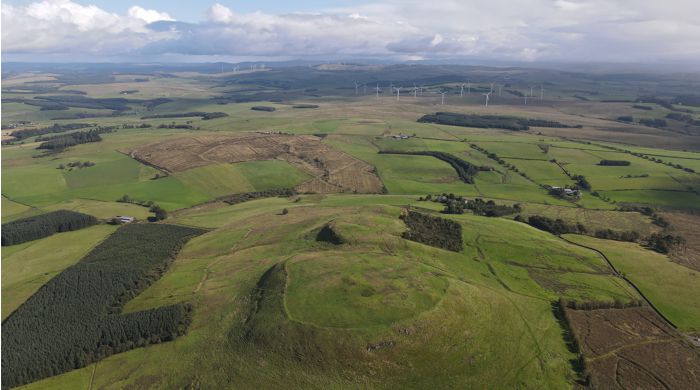
Aerial Photograph of Burnswark Hillfort and Roman Camps (photo: James O'Driscoll)
Burnswark Hillfort in southern Scotland has been named one of the country’s most significant archaeological discoveries of 2025 after new research revealed it was not just a Roman battlefield, but a large, thriving Iron Age settlement. A team lead by University of Glasgow Archaeology staff have uncovered evidence of a densely inhabited, carefully planned community within the seven hectare hillfort, including trackways and monumental rampart rebuilding after Roman contact, showing it continued to function as an important indigenous centre well into the Late Iron Age. These findings challenge long-held views of Iron Age life in northern Britain, suggesting Burnswark may have been an urban-like hub nearly a thousand years before Scotland’s first recorded towns.
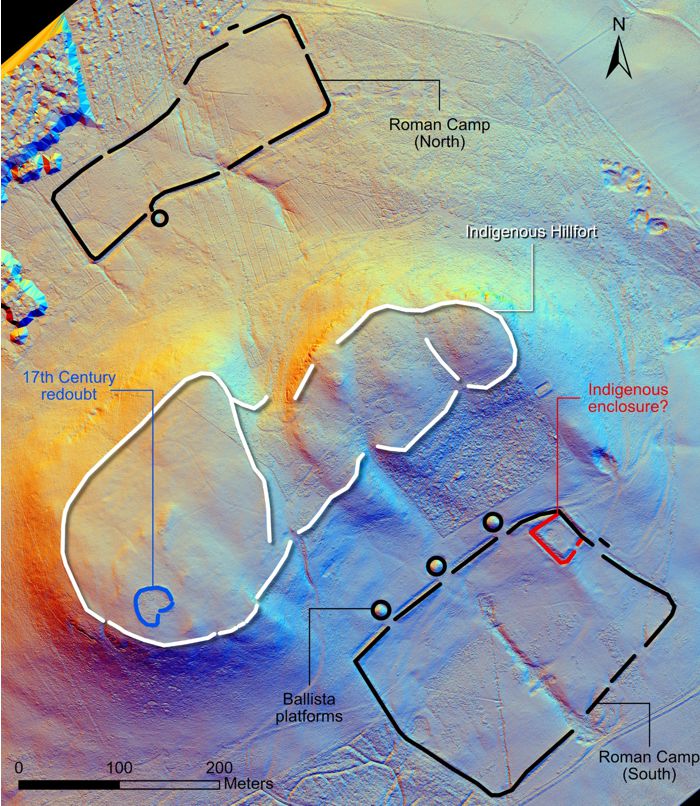
Lidar image with Burnswark hillfort and Roman camps highlighted (image: James O'Driscoll)
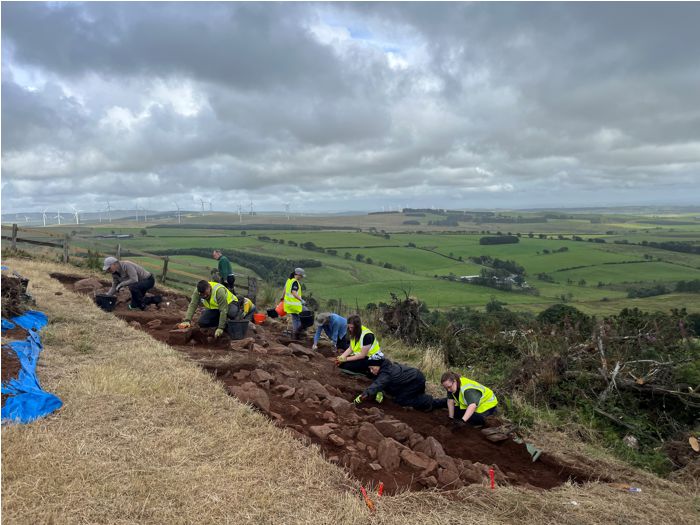
Students and volunteers excavating part of the hillfort defences (photo: James O'Driscoll)
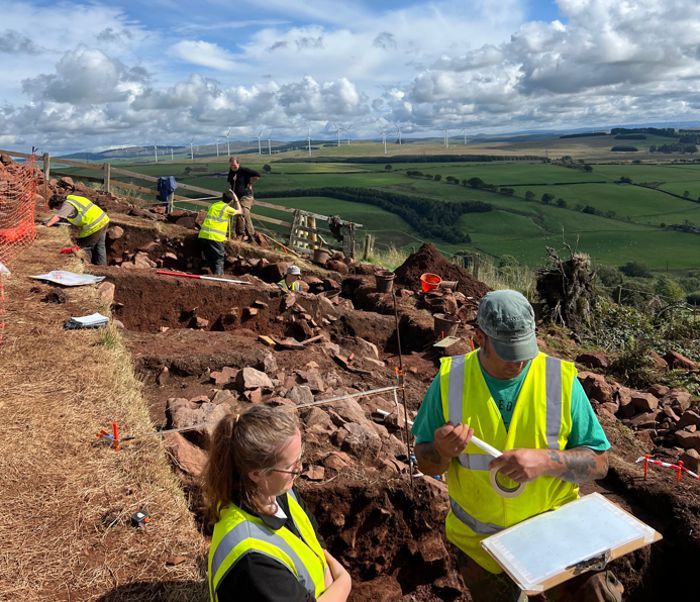
Recording of rampart sections (photo: James O'Driscoll)
First published: 19 December 2025
<< Latest news